Five years ago, missing the Geneva Motor Show was virtually unthinkable for any big car maker, but this year's list of exhibitors is embarrassingly sparse. Andrew Frankel looks behind the staggering demise
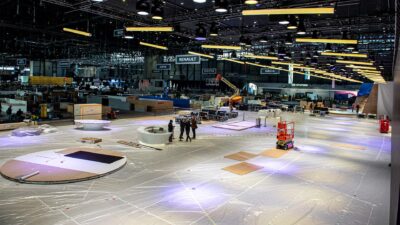
2020 Geneva Motor Show was cancelled just three days before it was due to open, with stands under construction
To someone who, in most years of his three-and-a-half decade career, had gone to Geneva every March because it was the one show at which almost everyone of any importance was near guaranteed to turn up, this is a staggering turn of events.
Instead the halls will be, for want of a better word, ‘filled’ by companies such as Assura, Auto-i-DAT, Beeway, Caresoft Global, Classics Legends Motor, ErreErre Fuoriseries, Lazareth, Martin Engler, Microlino, Race World, Shenzer, Silence, Swiss Racing Lab and Totem Automobili. And don’t worry, because I haven’t either.
Ferrari revealed its F8 Tributo at Geneva in 2019, but there are few big brands there this year, let alone world premieres
Robert Hradil/Getty Images
Names you will have heard of include Renault and its Dacia offshoot, MG Motor, Isuzu and Pininfarina, while names you may well have heard of include BYD, Kimera, Lucid and that’s about it.
It is an astonishing fall for what was always been the most prestigious and important motor show on the calendar, despite the fact that this will be the first in five years. So what happened?
It was a year dominated by new electric car launches — too many of which were lacklustre. But among the cars that over-promised and underdelivered, Andrew Frankel found some gems — both battery- and petrol-powered
By
Andrew Frankel
A few things, all related to one single issue: Covid. It starts with the 2020 show which was scheduled long before the virus got a hold. Nearer the time and although it was clear as day to many, and some considerable time in advance, that holding an indoor gathering for many thousands of people as the virus raged across Europe was simply not going to happen, the organisers refused to cancel the show. It was only when the government banned meetings for over 1000 people three days before its opening that they regretfully announced that for reasons beyond their control the show was unable to go ahead, thereby neatly shifting the blame. Dark stories of force majeure enabling hotels to refuse refunding massively expensive block bookings were not hard to find, nor were public relations officers boiling with quiet rage at how they perceived they’d been treated.
There was, of course, no show in 2021 or 2022, and there was going to be one in 2023 until there wasn’t but, fret not, there’d be another later in the year in, you guessed it, Qatar. And that actually happened. You may consider the Geneva Motor Show in Qatar an oxymoron up there with airline food and industrial action, but at least some manufacturers actually showed up to that one, including Audi, BMW, Kia, Lamborghini, Land Rover, McLaren, Mercedes-Benz, Nissan, Porsche, Toyota and Volkswagen. Even so, there was not a single unveil of a globally significant car.
And not one of them then felt inclined to show their faces in actual, real Geneva, a place where once upon a not so very long ago, it would have been inconceivable for them not to go.
2023 Geneva Motor Show was held in Qatar and opened by Akbar Al Baker, chairman of the country’s tourism board
Getty Images
Audi commited to F1 based on the current engine regulations
Getty Images
Qatar staged a ‘Parade of Excellence’ at Geneva-badged show
Getty Images
What the organisers are discovering is that Covid did not happen in a bubble – an event that came and went. In an unfathomable number of ways, it changed the way the world did all sorts of things, a certain sort of business among them. Because, unlike the Geneva International Motor Show (to give it its full name), car manufacturers could not just put themselves into a state of suspended animation until the coast was clear. They had to find a way of continuing to show the world their wares.
So they did. I spoke to a few people I know well in the industry and they all said remarkably similar things. They held their own gatherings, rather than attending a mass gathering. And what they discovered was it allowed them to tailor their events and messaging to precisely their own requirements and to not compete with all their rivals for every column inch going. One more thing: doing it that way saved money, and wildly so once the returns were factored in. On a cost/benefit basis, this conventional motor show simply no longer made sense to the biggest, most famous, longest established car brands.
But is there a way back? There is clear irony in the way the stuffy old motor show is now being taken over by hungry young start-ups as the traditional business walks away, but is that simply because in their absence it’s a great way to get your little known name into the headlines? Or perhaps the price of a stand is not what it once was? Or, probably, both. I don’t know, but my long held belief that this format for showing cars to the world, invented a century or more ago, is in a state of terminal decline. All Covid has really achieved is to accelerate an already inevitable process.
After an inglorious stint in the City convinced him that he could handle cars better than he handled money, Andrew joined Autocar many years ago as a junior tester. Since then he has become one of the industry’s senior figures. Editor of Motor Sport for five years, he now runs our road test section.