We will have to wait until 2022 to discover that because, as of now, the only ‘car’ that exists is actually a model and the first mule – based on an Ultima sports car – is only about the start running. But after a solid year and a bit of development, Gordon reckons he’ll have all 100 customer cars out of the door by the end of 2022. There will be 25 track versions too.
So it might seem strange that not all are sold, but not to Gordon. He’d expected no more than ten per cent of customers to have ordered a car without even seeing it, not least because each T.50 costs £2.36 million before tax. “I’ve made no attempt at all to push it, because I wanted people to see it first,” he says. In the event most cars have already found homes, such is the confidence in Murray’s abilities. “If you think about it as a car that will be incomparably better than F1 in every single way, but comes at an 85 per discount relative to the cost of buying an F1 today, what you have is a car you’re not going to frightened to use.”
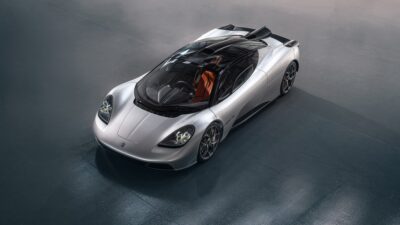
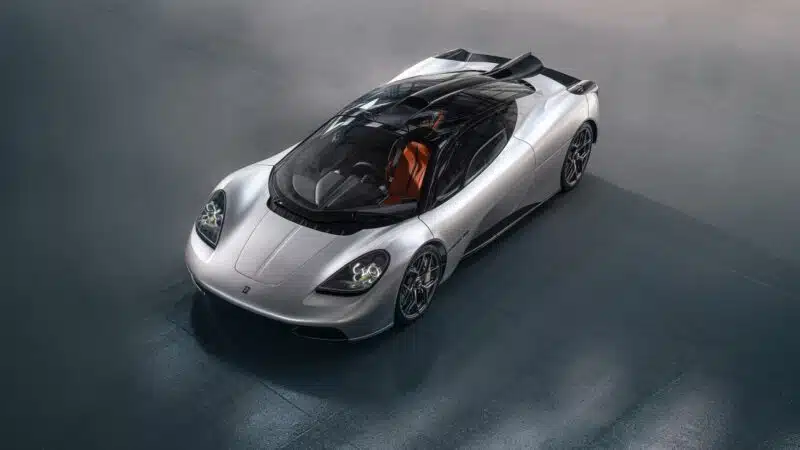
The T.50 does indeed look extraordinary, if only because it is so small and its shape so clean compared to the monster hypercars to which we’ve become increasingly acclimatised. Its footprint is very little bigger than that of a Porsche Boxster and while it does have deployable aerodynamics (not to the mention that rather conspicuous fan out the back), it is the cleanliness of the T.50’s shape that strikes you first and hardest.
You can see the F1 in its too, at the front, the side and in its rear spine under which will sit the lightest, most energy-dense naturally aspirated V12 the world has ever known, producing more power on fewer than four litres of capacity than the F1’s did on more than six. How? Well the fact the F1 motor spun to around 7800rpm and this one is safe past 12,000rpm probably has quite a lot to do with it. It only fired up for the first time in the last week or two so I don’t believe anyone has yet heard it at full chat, but it should sound absolutely incredible.