


F1
Where has each F1 team spent its 2021 development tokens?
Development has been limited between 2020 and 2021 so teams have had to be selective about where it has spent tokens

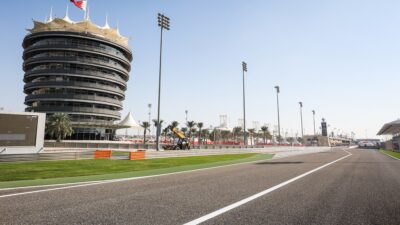
A warmer, shorter preseason test for F1 in 2021
DPPI
Formula 1 is back in Bahrain. Preseason testing has begun, ahead of the first grand prix of the season in Sakhir at the end of the month, offering the first opportunity to see how the 2021 cars perform on track.
It’s also the first opportunity to spot any design innovations for this year. Each team has revealed some aspects of their 2021 machines but, until now, none have shown the full picture.
They have been particularly secretive about rear sections of their cars, as they seek to recapture some of the downforce lost with new aerodynamic rule changes, but there will be far less opportunity to hide their upgrades during testing.
Cars will use the usual international layout, and drivers will take turns on track between Friday and Sunday, as they seek to gather as much data as possible.
Development has been limited between 2020 and 2021 so teams have had to be selective about where it has spent tokens
Testing promises to be a much warmer occasion than usual. Bahrain last hosted a preseason test in 2014 but Barcelona has been in favour in recent years, as it’s quick and easy for teams to get to, with a varied layout to assess the cars — but this comes with cooler temperatures.
With the postponement of the Australian Grand Prix; continued coronavirus restrictions in Europe; and a reduced three days of testing, it made sense to switch this yer’s session to Bahrain. Teams can leave their infrastructure and equipment in place at the end of this weekend, ahead of the first grand prix of the year on March 28.
Temperatures are forecast to be between 23C and 33C this weekend, making it comfortably warmer than winter in Spain, and more representative of race conditions.
The climate will make it easier to assess tyre preparation and degradation, as well as the cooling packages on the cars. That’s just as well given that testing time is halved from six days to three this year.
It remains to be seen what teams can achieve. Last year, with six days of testing, only six teams managed to carry out a full race sim. With the need to correlate simulator data, check real-world airflow and aerodynamic performance, assess new tyre compounds, and run through settings, teams will have to make the most of every minute.
Any breakdown or part that doesn’t work as expected will have a heavy impact on teams’ schedules, and not just in terms of time lost on track: any replacements are a seven-hour flight from most factories.
A cut-back floor area and the banning of slots in the floor are among the regulations changes aimed at reducing downforce — and load on the tyres — by 10% this year.
But designers are looking to recover as much of that as possible, which is one reason why teams have kept the rear end of their cars secretive — until now. Cameras will be trained on the rear of each car as they roll into the pitlane, offering our first glimpse of the diffuser, rear brake ducts and the floor around the rear wheels, where innovative designs are expected.
More than ever, teams will need to get it right first time. Strong early-season pace will give teams the confidence that they’ll remain competitive all season, allowing them to switch focus early to next year’s car.
With a budget cap in place and large-scale rule changes for 2022, the more resources that can be allocated to next season improves a team’s chances of baking in a competitive advantage that can be maintained for years.
Speed trap results should offer some evidence of how power units have been developed over the winter. All manufacturers have promised improvements, and are working frantically to upgrade their engines and hybrid systems before the freeze on development at the end of the year.
However, don’t take it for granted that all will run in maximum power mode at some point in testing: some teams may keep a little in reserve.
It’s not just top speed figures that you need to be wary of. Unless you’re viewing the data from inside the garage, a car’s true competitiveness won’t emerge from testing. Without knowing fuel loads, engine modes or tyre compounds, it’s impossible to compare cars with absolute certainty.

It comes that time of year when we get the first slivers of information about the competitive shape of the season ahead, where we sift through the lap times from…
Mark Hughes explained the problem ahead of testing last year in this article.
Testing isn’t the place to assess the competitive order among drivers. The limited time on track is likely to mean that team-mates are different tasks, and there’s no guarantee that each will have a chance to run a low-fuel qualifying sim.
So, you’ll have to hold your judgement as to whether Sergio Perez can avoid the fate of Max Verstappen’s previous team-mates, Pierre Gasly and Alex Albon; if Daniel Ricciardo can maintain McLaren’s top three position, and how the Carlos Sainz and Charles Leclerc relationship will develop at Ferrari.
You’ll need to be up early to see the first cars roll out of their garages, at 7am UK time on each of the three days (10am in Bahrain).
The times are identical each day, with the morning session running until 11am GMT, with the track reopening from 12pm to 4pm.
Most teams are splitting the driving between team-mates for the morning and afternoon sessions, but some drivers have all of the first day to themselves, including Roy Nissany, Williams’ test driver.
The Friday schedule is below.
| Team | Morning session | Afternoon session |
| Mercedes | Valtteri Bottas | Lewis Hamilton |
| Red Bull | Max Verstappen | Max Verstappen |
| McLaren | Daniel Ricciardo | Lando Norris |
| Aston Martin | Sebastian Vettel | Lance Stroll |
| Alpine | Esteban Ocon | Esteban Ocon |
| Ferrari | Charles Leclerc | Carlos Sainz |
| AlphaTauri | Pierre Gasly | Yuki Tsunoda |
| Alfa Romeo | Kimi Räikkönen | Antonio Giovinazzi |
| Haas | Mick Schumacher | Nikita Mazepin |
| Williams | Roy Nissany | Roy Nissany |
Live coverage of all three days of testing is being broadcast on Sky Sports F1, which can be accessed through pay TV or the Now TV app. Tune in at the following times (GMT):

Stability in uncertain times: that was the idea behind the 2021 Formula 1 season following the havoc wreaked last year by Covid. But despite pushing the large-scale car design regulation…
Friday, March 12
6.50am-11.05am: Morning session
11.55am-4.10pm: Afternoon session
Saturday, March 13
6.50am-11.05am: Morning session
11.55am-4.10pm: Afternoon session
Sunday, March 14
6.50am-11.05am: Morning session
11.55am-4.10pm: Afternoon session