


Archive
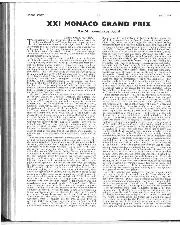
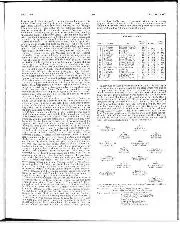
1963 Monaco Grand Prix race report: BRM beats the street
This year it was the turn of the Monaco Grand Prix to be called the Grand Prix of Europe, but more important it was the first Grande Epreuve of the…

Recreate an epic Monaco Grand Prix in scale form
| Sponsored by | 
|
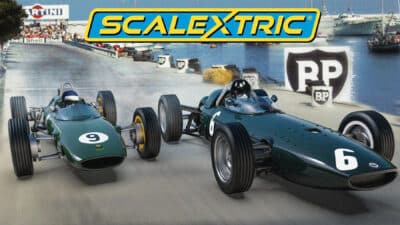
For fans of motor sport’s golden age, the Scalextric 1963 Monte Carlo Grand Prix Twin Pack is a tribute not just to two iconic cars, but also to two titans of British racing: Jim Clark and Graham Hill.
The set captures an unforgettable slice of Formula 1 history, putting you at the heart of one of the sport’s most storied showdowns.
In May 1963, the streets of Monte Carlo saw Clark and Hill squared off in machines that embodied the changing face of grand prix racing.
Clark’s Lotus 25, revolutionary in its monocoque design, was the spearhead of Colin Chapman’s new order. Hill’s BRM P57 represented the established guard.
That duel produced a moment of drama worthy of Monaco’s reputation.
The Monte Carlo event kicked off the 1963 world championship season and was known for its incredibly limited grid due to the circuit’s short length – only 16 cars were allowed to start.
Clark started the race from pole, but the BRMs of Hill and Richie Ginther beat the Lotus driver off the line.
The early laps saw Hill and Ginther leading, with Clark quickly moving up to second by lap 5 and overtaking Hill for the lead on lap 18.

Clark chasing Hill in Station Hairpin
Getty Images
The intense head-to-head battle featured constant position swaps, including John Surtees also briefly challenging Hill and Ginther mid-race before mechanical troubles and visibility issues slowed him down.
Clark’s race ended prematurely on lap 78 of 100 due to a broken gearbox, handing the lead back to Hill, who remained composed to take the checkered flag. Ginther finished a close second, and Bruce McLaren secured third, making it a strong day for BRM teams.
Hill’s victory there established him as ‘Mr. Monaco,’ beginning a legendary connection with the race that lasts in motor sport history.
More than 60 years later, Scalextric has distilled that clash into miniature form.
The 1963 Monte Carlo Grand Prix Twin Car Pack brings these two icons together again – this time in 1:32 scale, ready to duel on the living-room circuit.
Few cars changed the trajectory of Formula 1 like the Lotus 25. Its aluminium monocoque chassis set new standards for stiffness and lightness, rewriting the engineering rulebook.

Clark dominated the season with the Lotus 25
Clark won a total of 14 races driving the Lotus 25. Most notably, in the 1963 season, he won seven out of the 10 races which helped him secure his first title and also brought Lotus its first constructors’ championship.
He continued to use the Lotus 25 during the 1964 season, adding three more wins, and took the car’s final win at the 1965 French Grand Prix.
The Scalextric rendition captures the essence of this game-changer, resplendent in British racing green and marked with Clark’s race number 9.
If Lotus was the disruptor, BRM was the establishment. The P57 was the culmination of years of persistence, powered by the team’s complex V8 and clothed in a conventional but effective spaceframe.

Hill on his way to victory at Monaco
Getty Images
Hill used it to win his first world championship in 1962 and, at Monaco a year later, proved its mettle again.
Scalextric’s model, wearing number 6, reflects the car that carried Hill to victory that Sunday afternoon. Its green livery is offset with authentic markings, and like the Lotus, it is officially licensed by Classic Team Lotus and British Racing Motors.
Both cars feature Magnatraction for improved stability, Easy Change Guide Blades for quick maintenance, and compatibility with Scalextric’s digital systems.

All the refreshed driver pairings, team principal changes, and subtle regulation tweaks that could shake up the 2023 F1 season
All the refreshed driver pairings, team principal changes, and subtle regulation tweaks that could shake up the 2023 F1 season
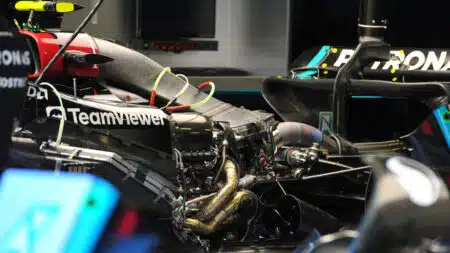
Mercedes is rumoured to have an engine innovation promising a significant advantage over other Formula 1 power units. It could mean rivals are allowed extra benefits to catch up, explains Mark Hughes
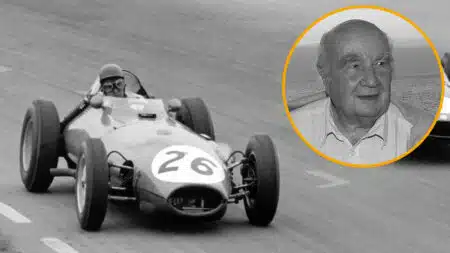
The death last week of Hans Herrmann leaves just four living drivers who raced in 1950s world championship grands prix. The first decade of Formula 1 will soon slip beyond living memory