


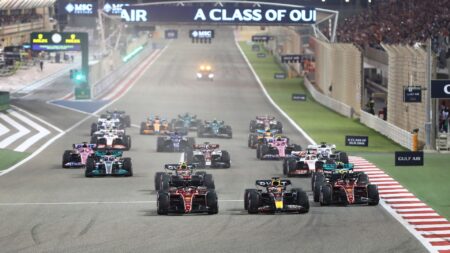
F1
Autolinking test 3: What's new in Formula 1 2023: drivers, team bosses and rules
All the refreshed driver pairings, team principal changes, and subtle regulation tweaks that could shake up the 2023 F1 season


Ferrari’s ers system will be monitored and regulated by the FIA

As from the beginning of the first practice session in Monaco, and at the FIA’s insistence, the Ferrari ers system will be fitted with a piece of hardware that will make it impossible to operate in a way that could get around the regulations on energy deployment per lap. This is in response to questions raised by Mercedes’ Niki Lauda.
The FIA’s Charlie Whiting has been very careful to underline that there has been no evidence that Ferrari has been running its unique double-in-tandem battery arrangement in an unscrupulous way. Data from the first five races is still being analysed by the FIA in an ongoing process, and Ferrari is co-operating fully.
Uniquely, within the Ferrari’s battery casing are twin batteries in tandem – and this architecture is exactly as it has been since the beginning of the hybrid formula in 2014. What has been speculated from this year by rivals is whether this might allow a system whereby a second energy output to the ers-K could be used to momentarily boost the energy flow beyond the 120kW limit, by-passing the FIA sensors, possibly by way of a chip modulating the resistance between the two outputs.
This is what has been vexing Lauda who has been quite outspoken in his calling for the FIA to make a ruling on whether twin batteries are permitted. The FIA is not publicly responding to Lauda directly but points out there is nothing illegal about the architecture of the Ferrari system – and that if any team is convinced that something illicit is going on, it should lodge a formal protest.
All the refreshed driver pairings, team principal changes, and subtle regulation tweaks that could shake up the 2023 F1 season
All the refreshed driver pairings, team principal changes, and subtle regulation tweaks that could shake up the 2023 F1 season
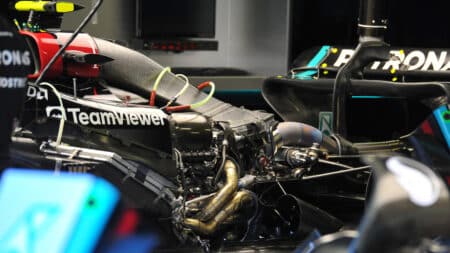
Mercedes is rumoured to have an engine innovation promising a significant advantage over other Formula 1 power units. It could mean rivals are allowed extra benefits to catch up, explains Mark Hughes
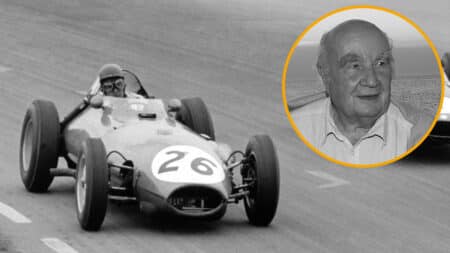
The death last week of Hans Herrmann leaves just four living drivers who raced in 1950s world championship grands prix. The first decade of Formula 1 will soon slip beyond living memory