


F1
Five classic Formula 1 ground effect cars
Formula 1 and the FIA have just provided more meat on the bones of the brave new world they propose for the 2021 season. And they have said that, to…

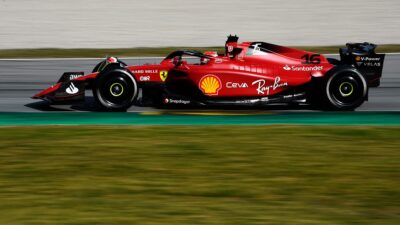
Ferrari has been caught out by bouncing effect at high speed, says Binotto
Rudy Carezzevoli/Getty Images
The first teams to solve the ‘porpoising’ issue with this year’s F1 cars will be fastest when the season starts, Ferrari’s team principal Mattia Binotto has said, after admitting that the issue had caught all of the teams off guard.
Cars have been seen bouncing up and down on the straights during testing in Barcelona, and the race is now on to find a solution that costs a minimal amount of performance.
Porpoising is caused by the new underfloor channels that generate ground effect, which have seen a return of the phenomenon, 40 years after the first generation of ground effect cars were banned.
Bumpy road to the top for Charles Leclerc! 🤕#F1 pic.twitter.com/Z6a5e6d3bo
— Formula 1 (@F1) February 24, 2022
At high speeds, the increasing pressure above the floor pushes the car down, while air flows faster through the floor channels, reducing pressure and pulling the car towards the ground.
Eventually airflow separates from the surface or the floor hits the ground and downforce rapidly decreases. This raises the car, which restarts the ground effect and the process repeats generating a motion that recalls a porpoise bobbing through water.
It’s uncomfortable and can damage cars on straights, with even more severe consequences if downforce is lost in high speed corners.
Formula 1 and the FIA have just provided more meat on the bones of the brave new world they propose for the 2021 season. And they have said that, to…
Early ground effect cars, such as the Lotus 80, were afflicted before flat floors were made mandatory in 1983. It wasn’t expected to reappear in 2022 because it didn’t show up in wind tunnel testing or simulations.
“It seems that most of us at least underestimated the problem,” said Binotto. “We found when we were on track, we are bouncing more than expected.”
The Ferrari boss said that solving the problem was “straightforward”: raising the ride height will eliminate the issue. However, this also reduces downforce, so finding a solution that retains as much performance as possible is key.
“Optimising the performance — because it should not be a compromise that you strike — [in] avoiding bouncing but getting the most out of the performance of the car, that will be a less easy exercise.
“I’m pretty sure that at some stage each single team will get to the solution. The ones that get there sooner will have an advantage at the start of the season.”

Every team will have a fix by the fourth race of the year, says Alfa’s Frédéric Vasseur
DPPI
The first four races are expected to see large swings in performance as teams continue to develop their cars; copy rivals’ ideas; and improve their set-ups. Solving the porpoising issue will add another variable to the mix, according to Alfa Romeo team principal Frédéric Vasseur.
“Aero phenomenons are not easy to duplicate in the wind tunnel or simulator and we are all facing the same issue,” he told a Barcelona press conference. “As Mattia said, the fix is not the biggest issue but to be efficient will be the key.
“How quickly the team reacts will be key for the first races. I’m sure that [after] three or four events we won’t speak any more about bouncing.”