


F1
2026 F1 regulations revealed: ‘smaller, nimbler, raceable’ rules explained
The FIA and F1 have revealed the world championship’s new technical regulations for 2026 – we break down the new rules below

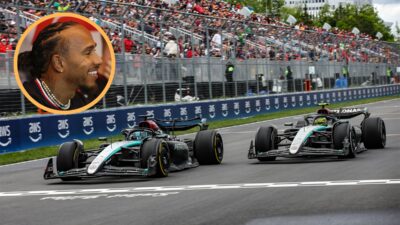
Is Brackley back? The Canadian GP certainly suggests so
Grand Prix Photo/Mercedes
A week that started with a focus on how to make racing better in two years’ time ended with a thrilling race and three different teams in the mix for victory, even if it was a familiar winner. But it wasn’t all perfect in Montreal, despite the race’s obvious strengths.
It was a slightly odd approach from the FIA to release a significant amount of detail about the 2026 regulations on Thursday morning before they have even been finalised or ratified by the World Motor Sport Council, and the reasons became clear as the weekend evolved.
Some drivers picked holes in the new rules while others were far more supportive of them, but it was when the team principals and engineers started addressing them that real dissent started to appear.
Many of the teams clearly have areas that they are unhappy with, already criticising the potential lap time difference compared to the current cars (despite new regulation cycles regularly seeing a significant drop-off before rapid development) and raising concerns regarding a mismatch in the cornering and straight line speeds.

Slimmer, lighter, but will they be better?
FIA
The weight was also flagged as an issue, with teams not believing it is likely they can reach the 30kg lighter limit, and stating that further work and discussions are needed.
The FIA and F1 have revealed the world championship’s new technical regulations for 2026 – we break down the new rules below
The FIA’s Nikolas Tombazis stated on Saturday that the released regulations are still very much a work in progress, but added that the governing body wanted the information to go direct to the media and fans, rather than be leaked via team briefings in a potentially more negative fashion.
It lent itself to the view that the FIA has a clear desire to push F1 in the direction fans and drivers want with smaller and lighter cars, but is finding it tougher to do so given the power unit regulations it has committed to from 2026 onwards.
As a result, it has outlined its current targets in the regulations but the pushback from the teams now becomes public rather than private, to show how it will be a collaborative decision if some of the overall aims are deemed unreasonable, rather than the FIA being criticised more heavily when the final rules are in place in the coming months.
The month of May is a big one in American motor sport, and McLaren was chasing success on two fronts at the same time two weeks ago, with Oscar Piastri and Pato O’Ward each finishing as the runner-up in the Monaco Grand Prix and the Indy 500 respectively.
While Zak Brown has overseen a resurgent McLaren team in F1, he’s also had a major hand in its presence as one of the big hitters in IndyCar, with O’Ward fourth in the championship standings and Alexander Rossi also in the top 10.

Leader of the pack: McLaren have become a motor sport force once again under Brown
Getty Images
And it was a reminder of how much the Californian takes on when I got to speak to him about the fallout between McLaren and Juncos Hollinger in IndyCar, triggered by social media abuse that Theo Pourchaire received after crashing into Agustin Canapino in Detroit last weekend.
Perhaps it was easier dealing with such a controversy given the form shown by the F1 team, as Brown arrived in Canada to watch it challenge for victory for the fourth straight race. It might have fallen just short, but it has been more consistent than even Red Bull over that span.
Ever since Brown made big managerial calls at the start of last year, the trend has been rapidly upward, and to achieve that while also being responsible for the other racing programs — also including Formula E and Extreme E — is pretty impressive.
I don’t think it’s an exaggeration to say George Russell’s pole position was a major surprise on Saturday, even with the signs of progress from Mercedes in recent weekends.
The Monaco front wing upgrade was a talking point after Lewis Hamilton referenced it post-qualifying, but its actual influence has yet to be seen, with James Allison suggesting Barcelona will be a truer test of its performance impact.

Russell’s pole position is the first sign that Mercedes are on the right track
Mercedes
Yet the atmosphere at Mercedes ahead of this race weekend was telling. Even before the car had turned a wheel before FP1 — when there was a monumental hailstorm — Allison was bullishly describing the most recent Red Bull upgrade from Imola as a “downgrade”, and joking “so fingers crossed that will really f**k them up!”
While Allison was raising his voice above the weather (or at least trying to), Hamilton emerged into the front of Mercedes’ hospitality unit with a huge grin on his face to declare it was time for all of the media to leave. Laughing at how brutal the conditions were outside he joked about there being no reason not to go outside, before then telling reserve driver Fred Vesti that he could drive instead in FP1.

Is Mercedes’ best still yet to come?
Mercedes
A small moment though it was, it was part of a notably light-hearted mood within the team, that was backed up by the performance that followed on track. Even though by the team’s own admission future races are likely to be far tougher, it’s a sign of the growing feeling that Mercedes is finally on the right track in this regulation cycle.
There’s so much that is great about the Circuit Gilles Villeneuve, and the race track itself is at the heart of that. There’s real character to it, it punishes mistakes on the exits of the chicanes and also can provide overtaking opportunities, especially when grip levels are low.
The weather certainly played a part in the on-track action being so good, but it also highlighted a number of the major flaws with the venue too.
It must be said that Formula 1 is developing at such a rapid rate, what was generally a slight issue five years ago is now a far bigger problem that the sport wants to see addressed.

Wet weather plagued the entire Canadian GP weekend
Getty Images
Friday’s storm before FP1 saw confusion as the entrances to the track were closed, leaving thousands of fans stuck out in the weather and many turned around at the metro station due to a lack of communication over the plan for the rest of the day. Some believed the sessions were cancelled, although nothing to that end had been officially stated at all.
Come Saturday evening, trying to get off the island was similarly challenging as the bridges were closed again in both directions and people were stuck at the track, unable to get on and off. Given how difficult it is for vehicles to move around anyway — and therefore reliant on shuttles that fans and teams can be — it caused a lot of frustration.

Wet and frustrated fans were at least rewarded with an action-packed race
Getty Images
There’s so much potential at this venue, but a new pit and paddock building that retains open sections where there should be walls, has leaked significantly in two consecutive years into commentary boxes, and access points that see guests walking through mud into small temporary team units don’t match the standard of the majority of circuits that F1 now races at.
Further improvements are needed to host such a major international event successfully long-term, and I really hope the race organisers make them because this is one that the majority of fans definitely do not want to lose from the calendar.
All the refreshed driver pairings, team principal changes, and subtle regulation tweaks that could shake up the 2023 F1 season
All the refreshed driver pairings, team principal changes, and subtle regulation tweaks that could shake up the 2023 F1 season
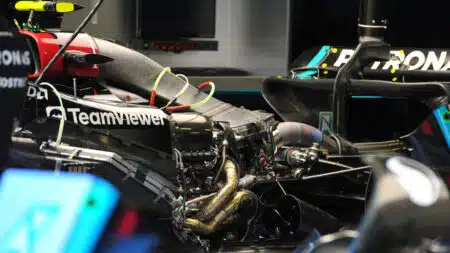
Mercedes is rumoured to have an engine innovation promising a significant advantage over other Formula 1 power units. It could mean rivals are allowed extra benefits to catch up, explains Mark Hughes
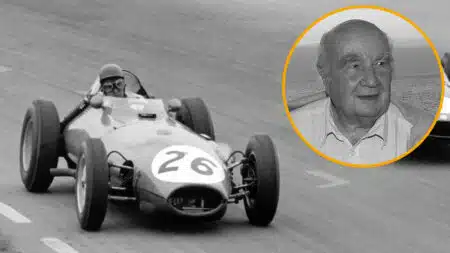
The death last week of Hans Herrmann leaves just four living drivers who raced in 1950s world championship grands prix. The first decade of Formula 1 will soon slip beyond living memory