Damon Hill’s incredible racing journey is one of F1’s most celebrated.
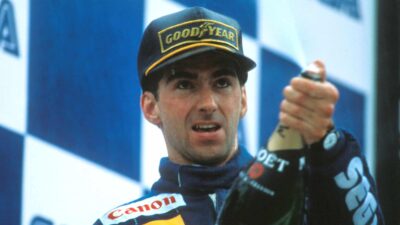
The son of legendary double world champion Graham Hill, who he then tragically lost in a plane crash, entered racing late and spent years fighting his way up the junior ladder, before finally taking the title himself in 1996 at the age of 36 with Williams.
However, as the team’s former technical director Patrick Head has revealed, Hill’s Williams F1 journey was almost over before it started.
Speaking in the first episode of Motor Sport’s new podcast series, Engineering the Greats 2, the legendary F1 car designer says Hill didn’t fit team boss Frank Williams’ image of the ideal racing driver, due to not being “exotic enough”.
Hill had made his grand prix debut late, at the age of 32 in 1992. After failing to qualify for five races in a row with the hopeless Brabham-Judd BT60B, hill had finally made his first race debut at that year’s British GP. He was also performing testing duties for Williams at the same time, having started the role in 1991.
At that point the chance of him becoming a full-time racing driver with Williams was remote – until fate played its part.
Rejoining our Engineering the Greats podcast, legendary F1 designer Patrick Head lifts the lid on Williams’ landmark 1993 season, which featured the one of the most technically-advanced racing cars ever: the FW15C
By
Motor Sport
“Damon was test driver on our active programs through 1991 and 1992,” says Head.
“We were running Nigel [Mansell] and Riccardo Patrese. Because Riccardo knew that we’d signed up Alain Prost, he assumed that there was not going to be a place for him in the Williams team, so he joined Benetton.
“Then of course, Nigel got umbrage [over Williams signing Prost] and went off to race in in America. And so all of a sudden, we had a [free] place.”
All the while, Hill had been quietly impressing as he racked up the testing miles.
“The people who had been running the test team, Paddy Lowe, and various others said, ‘By the way, Damon’s been doing lap times that are just as good as the current race drivers,’” remembers Head. “They promoted him a lot.”
Senna represented the exact type of ‘exotic’ driver that Frank Williams preferred
Alamy
However, apparently Hill didn’t quite fit the bill as far as team boss Frank Williams was concerned. Though the team has often been noted for treating its drivers more as straightforward ’employees’ as opposed to other squads holding its pilots in reverence, Williams still enjoyed a roll call of stars behind the wheel.
“I don’t think Frank had the view at the time [of the test team],” says Head. “Frank liked moody, sort of ‘exotic’ [drivers] if I could say, whereas Damon was very straightforward and called a spade a spade.
“And so it took a bit of time to persuade Frank that Damon was the type of driver that we should have. But once that thing was overcome, then Damon fitted in very well. As you could see if you looked at results in ’93 – he won three races and was very often sitting on Alain’s tail in races, and was very much the equal in speed. So he was the perfect driver for us really.”
After Ayrton Senna’s tragic death the year following, Hill would suddenly become Williams team leader and narrowly missed out on the ’94 title – just two years after being a non-qualifier.
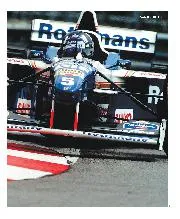
Though more heartbreak came in 1995, the Brit secured the drivers’ championship in 1996, as the team clinched yet another title double – showing Hill had been a pretty sound choice after all.