


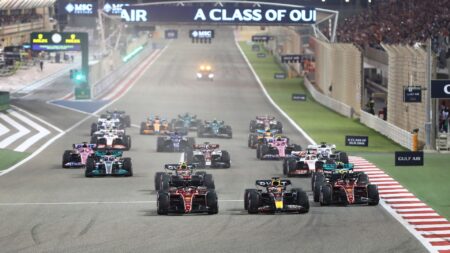
F1
Autolinking test 3: What's new in Formula 1 2023: drivers, team bosses and rules
All the refreshed driver pairings, team principal changes, and subtle regulation tweaks that could shake up the 2023 F1 season

In less than two weeks, Formula 1 heads back to Australia for the first round of the World Championship. With that in mind – as well as Nigel Roebuck’s new feature on F1 turbos – it’s a good time to look back at when F1 ended the season in Adelaide. This video is from 1985, the first time Australia featured on the championship calendar.
We join Patrick Tambay during practice in his Renault RE60B. His super-smooth style is on show here, corralling his car’s incredible horsepower with what looks like relative ease. It’s always interesting to watch the driving style of ’80s F1, all right angles and short bursts of power. The quick manual gearchanges at full throttle are something we definitely won’t be seeing next year, nor perhaps the whining rasp of the engine.
Murray Walker gives you plenty of information about the venue during the out lap but it’s worth noting that, with decent results tailing off, Adelaide ’85 was Renault’s last Grand Prix as a constructor before officially returning in 2002. Despite the best efforts of Tambay and Derek Warwick, the team had scored no wins and only seven podiums in the previous two years. Not bad, but nowhere near what was expected from them after Alain Prost’s close challenge for the title in 1983.

All the refreshed driver pairings, team principal changes, and subtle regulation tweaks that could shake up the 2023 F1 season
All the refreshed driver pairings, team principal changes, and subtle regulation tweaks that could shake up the 2023 F1 season
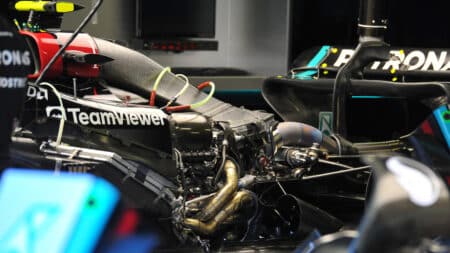
Mercedes is rumoured to have an engine innovation promising a significant advantage over other Formula 1 power units. It could mean rivals are allowed extra benefits to catch up, explains Mark Hughes
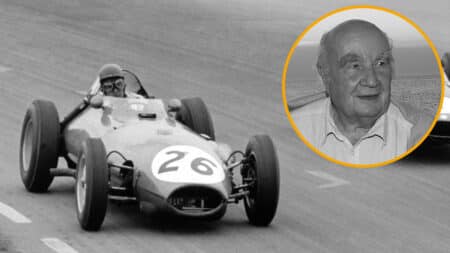
The death last week of Hans Herrmann leaves just four living drivers who raced in 1950s world championship grands prix. The first decade of Formula 1 will soon slip beyond living memory