


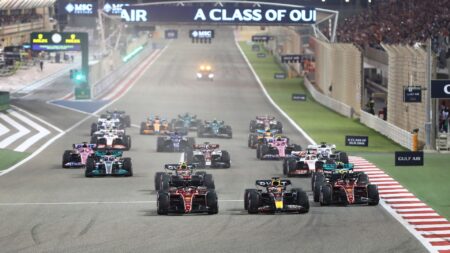
F1
Autolinking test 3: What's new in Formula 1 2023: drivers, team bosses and rules
All the refreshed driver pairings, team principal changes, and subtle regulation tweaks that could shake up the 2023 F1 season

The records that fell following the 2016 Abu Dhabi Grand Prix

1. Nico Rosberg secured the World Championship after 206 Grands Prix, the longest wait in terms of race starts.
2. In terms of seasons, it’s taken him 11, two fewer than Nigel Mansell’s 13.
3. The Rosbergs are the second father/son Formula 1 world champions after Graham and Damon Hill.
4. Rosberg’s points total is the third highest in history. Only Sebastian Vettel has scored more (2011 and 2013) – when there were fewer races.
5. Germany has won 12 of the last 23 world titles.

6. With victory in Abu Dhabi, Hamilton became the first driver to win 10 Grands Prix and not win the title.
7. Hamilton’s slow pace meant the top four were unusually close at the flag. But the margin of just 1.685sec is still a way off Monza 1971…
8. Kimi Räikkönen bettered Sebastian Vettel in the qualifying battle, the first time he has beaten a team-mate since 2006. He tied with Felipe Massa in 2007 and Romain Grosjean in 2013.
9. Red Bull claimed the DHL fastest pit stop award, servicing Max Verstappen in 2.11sec. That tied them in second with Mercedes-Benz with three awards, some 11 behind Williams.
10. Sergio Pérez scored points for the 10th race in a row to surpass the 100-point mark, a first for a Force India driver.

Compiled with the help of Database curator Peter Higham
All the refreshed driver pairings, team principal changes, and subtle regulation tweaks that could shake up the 2023 F1 season
All the refreshed driver pairings, team principal changes, and subtle regulation tweaks that could shake up the 2023 F1 season
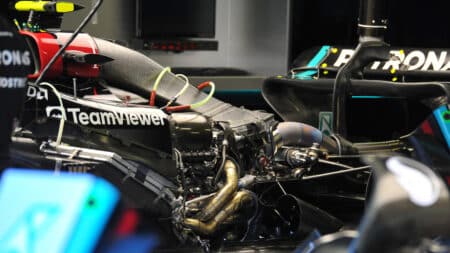
Mercedes is rumoured to have an engine innovation promising a significant advantage over other Formula 1 power units. It could mean rivals are allowed extra benefits to catch up, explains Mark Hughes
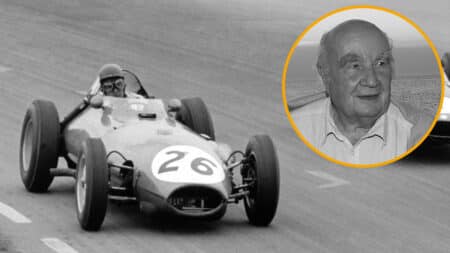
The death last week of Hans Herrmann leaves just four living drivers who raced in 1950s world championship grands prix. The first decade of Formula 1 will soon slip beyond living memory