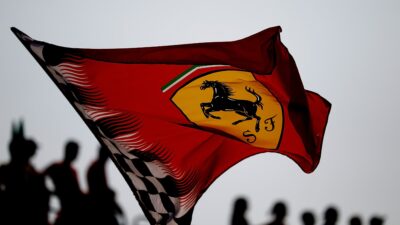
In my early career before inconveniences like children, I often toyed with the idea of becoming a Formula 1 journalist. And as a recently departed editor of this title, I could probably have engineered a way of doing it. At least for while until whichever hapless mug had agreed to publish my reports realised I was the worst F1 journo in the history of the sport. Because I’d spend my entire time explaining why Ferrari was robbed of every race it didn’t win.
Back then, over 20 years ago now, I was a hopeless Ferrari fanboy and today, on the eve of what some say is its 1000th Grand Prix entry (though that somewhat depends on how, who and what you count as an entry), I am scarcely less so. I’ve been so critical of a system that until Silverstone seemed likely to help Mercedes in its ambition to win every single race in a season (which has not been done since Alfa Romeo in the inaugural 1950 season, and then even if you exclude the Indy 500 which was then technically part of the championship), but were it Ferrari instead? I fear you’d not have heard a peep out of me.
It’s strange but I feel an entirely irrational connection to the Scuderia and before you ask, it thankfully has no influence whatever over on the road car side of the business, whose products I hope and believe I’ve always been able to assess with the same objectivity as those from anyone else. In my mind’s eye, I see them as entirely distinct and separate organisations.
So why the blind loyalty? I think a lot of it is historical: Ferrari is the only team to have been in F1 for every one of its 71 seasons. The first motor race my father ever saw was the 1951 British Grand Prix and he used to regale us with stories of José Froilán González‘s brutish 375 appearing through Woodcote at ever more improbable angles, V12 howling, in his ultimately successful quest to beat not only Juan Manuel Fangio, but the hitherto indomitable might of Alfa Romeo.
But Ferrari was human too and team the embodiment of the man whose name it bore. Of course McLaren and Tyrrell and others were people too, as is Williams to this day, but they were all far less intriguing to me than Enzo. Like the man his team was driven, dedicated, complicated and ruthless. He set driver against driver, to the extent that Carroll Shelby blamed him for the death of Luigi Musso at Reims in 1958, yet although I am not an authority, I cannot think of a single driver who died in a Ferrari as a result of the failure of a Ferrari-manufactured component. Unlike others, no-one ever accused Ferrari of risking drivers’ lives by building overly flimsy racing cars, at least so far as I am aware.