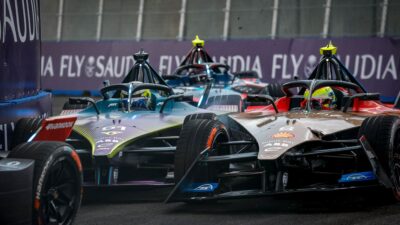
Credit where it’s due. The clear hierarchy when it comes to single-seater FIA world championships has been turned on its head in recent weeks. Right now, in terms of pure racing excitement and genuine spectacle, Formula 1 has been knocked clean from its perch. Formula E – yes, the whining electric-powered series so many of you love to hate – is not only far more unpredictable (which has always been the case), it is also intrinsically better and far more engaging in terms of the core racing action. Yes, really.
The cynics out there – that means you with the curling lip – might well argue that’s not hard right now given the underwhelming state of the new F1 season so far. But still, Formula E has also stepped up its game too. That much is obvious after its sixth event of season nine.
What a shame, then, that so few people – at least in stark contrast to the multi-millions that follow F1 – will even care to notice. Perhaps for the first time, I feel confident enough to say they’re all actually missing something. Formula E, finally, is coming of age.
So did you catch the latest Gen3 Formula E race in Sao Paulo last weekend? The answer, I know, is likely to be negative. In that case, I’d urge you to watch the highlights below. It was a zinger of a motor race, featuring a high degree of tactical intrigue that then evolved into a straight sprint to the finish, between three talented drivers in equally matched cars. They were separated by just half a second at the flag after 53 minutes of action, on a fast and brand new street circuit that showcased the best side of this more powerful generation of electric racing cars.
Yes, they still whine… it really is beyond time to look past the aggravating noise. But even the big Formula E ‘gimmick’ – the mandatory Attack Mode power boost – was less offensive and much less blatantly effective on this occasion than F1’s long-derided version, DRS, had been in Jeddah. The double dose of 50kW of power, taken in a variation of time but adding up to four minutes in total, added welcome tactical variation in the continuing absence of fast-charging pitstops, but didn’t impose itself as a defining factor in the result. That’s a decent balance to achieve.
The race in Sao Paulo was the third new venue in succession, and this far in adds to the evidence pool that suggests Formula E is finally nailing the black art of designing a city street circuit. Like Cape Town before it, this was a fast circuit wide enough for wheel-to-wheel racing without endless collisions, while overtaking was eminently possible, mostly but not exclusively on the run into Turn 1. The cars have an extra 100kW at maximum power and more than double the regen capacity of Gen2, and here it showed. Again, put aside the whine… (yes, yes, we know) – these are properly quick racing cars that are proving a handful for the talented grid of top-line single-seater talent who drive them.