What counts in motor racing? Just the taking part? No one really buys into that. Winning. That’s what matters when you get down to the grain.
Except in some cases defining winners in sport simply by results is blinkered and means remarkable stories can be overlooked. For some, just getting on to a grid is a victory in itself.
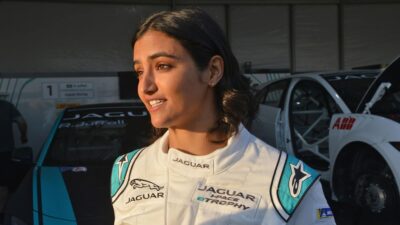
Take Reema Juffali. In three years racing on the UK junior single-seater scene, two in Formula 4 and last season in GB3 (what used to be British Formula 3), she didn’t feature on a podium at Brands Hatch, Silverstone, Oulton Park or anywhere else. But look closer at the context. She’s from Saudi Arabia, a country that banned women from even driving on the roads until 2018 – and she didn’t drive a racing car until she was well into her twenties.
As a Saudi woman with a racing licence competing overseas, Juffali is unique and breaking important new ground. Sure, she wants to win and hopefully in time she will. But for now, just racing at all marks significant progress far beyond her own personal ambitions. Like all women racers, she’s not competing to be an inspiration or a pioneer. But what she represents means she is anyway, and she’s learning to live with it.
“It’s something I’m finally getting my head around,” says Reema, who turns 30 next week. “The more I’m back home around either familiar faces who knew me before I was a racing driver or those who’ve only known me since, the impressions I get are of encouragement and support. Everyone seems to have taken something out of my story, whether it’s going into something unconventional or trying different things. Even just taking up a sport for the weekends: some of my friends have started triathlon training. It’s exciting to see because I think Saudis are very hungry for new things and excited for all these new events that are coming our way. It also opens doors for them, that actually this doesn’t just have to be a hobby but also a career. To play a small part in that has been one of the best surprises.”
Juffali grew up in Jeddah and recalls feeling an early connection to cars – which was automatically suppressed by the restrictive society in which she lived. “There was definitely a sense of frustration: I want this, but I can’t have it,” she says. “I don’t want to give a rosy image. It’s why I appreciate it now.”
Seven years abroad, studying in the US and then working in London and New York, finally allowed her to explore her growing interest in motor racing. She did her research, booked herself into a racing school and sought advice about how to make her way in what was a totally unfamiliar world. “Then life happened and I ended up taking a professional route into finance, doing the nine to five,” she says. “When I finally moved back to Saudi in 2017, there was still this itching desire to give this a go.”
By this time Saudi’s rulers had announced a plan to lift the archaic and deeply troubling female driving ban, and it happened the following year as Reema took her first racing steps in the UAE-based TRD 86 Cup. To then turn her back on a promising career, come to the UK and chase her dream to become a racing driver took guts, total commitment and clearly a significant financial investment. Last year she finished 18th in the GB3 standings for Douglas Motorsport. Nothing spectacular – but in the context of how she got to this point, where she came from and how she pitched herself into a deeply competitive world inhabited by younger racers, most of whom have years of karting experience she clearly lacks, deserves respect. And she has no regrets.
“Throughout the season I felt like I kept on improving,” says Reema. “With back to back races and a lot of them wet, my confidence in the car took massive steps. The team were very supportive in that sense. The biggest thing for me was my qualifying and generally I was not where I wanted to be. That put me on the back foot at most races, starting near the back. But that gave me the experience to learn how to attack and in the reverse-grid races defending too.”